Tree inspections in Hackbridge
When trees are growing close to homes, roads, gardens, footpaths, schools, workplaces, and shared boundaries, it makes sense to keep an eye on their condition. Tree inspections in Hackbridge help property owners understand what is healthy, what may need attention, and what could become a risk if left unchecked. For many local customers, the need is simple: you want your trees to stay attractive and safe without unnecessary removal or costly surprises.
Hackbridge has a mix of residential streets, newer developments, older houses with established gardens, sheltered housing, small business premises, and green spaces where trees contribute a great deal to the local character. That variety also means tree condition can change in different ways from one property to the next. A tree close to a driveway may need a different approach from one standing in a rear garden with limited access, and a mature specimen in a commercial car park will often require a very different level of inspection from a small ornamental tree near a front path.
If you are a homeowner, landlord, managing agent, business owner, or anyone responsible for trees on land in or around Hackbridge, a professional inspection can provide practical answers. It can help identify signs of disease, structural weakness, root problems, storm damage, overextended limbs, or issues linked to compaction, drought, or previous pruning. Request a free quote or book your service now if you need a local assessment carried out with care and clear communication.
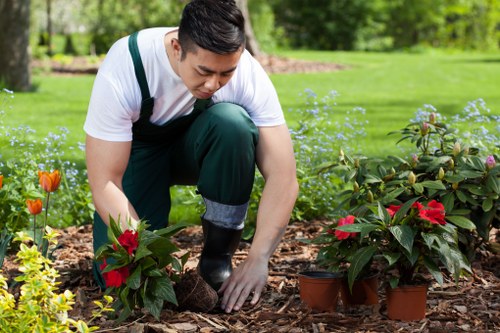
Why tree inspections matter for Hackbridge properties
Tree inspections are not just for obvious emergencies. In many cases, a tree appears perfectly fine from a distance while showing subtle warning signs that are only visible when examined properly. Early inspection can help prevent avoidable damage, reduce the chance of branch failure, and support better long-term tree care decisions. For local customers, that often means less disruption, fewer emergency call-outs, and a better understanding of how to manage trees over time.
In Hackbridge, many properties have trees that sit close to shared fences, conservatories, garages, parking bays, or public access routes. That can create practical concerns even when a tree is not obviously failing. A leaning stem, cracked branch union, dead wood in the crown, lifting roots, fungal growth at the base, or a history of recent storm stress may all justify closer attention. Professional tree inspections in Hackbridge are designed to assess these issues in a measured, evidence-based way.
Inspections are also useful when you are planning works nearby. If you are extending a property, improving a garden, resurfacing a drive, or organising maintenance near mature trees, it is sensible to understand how the trees may respond. The right inspection can inform pruning priorities, explain whether a tree should be monitored rather than cut back heavily, and help you decide what action is proportionate.
What customers often want to know
Most local enquiries are driven by a few common questions:
- Is the tree safe to keep?
- Does it need pruning, reduction, or removal?
- Could the tree be affecting a building, wall, fence, or pavement?
- Is there visible disease or decay?
- What should be done before storm season?
What is included in a professional tree inspection?
A proper inspection should be more than a quick glance from the pavement. It typically includes a structured visual assessment of the tree’s condition, looking at the roots, trunk, branches, crown shape, canopy density, and overall stability. The aim is to identify signs of damage or decline and then explain what they may mean in practical terms for the person responsible for the tree.
Depending on the situation, a tree inspection in Hackbridge may cover a single tree, a row of trees, or a group of mature specimens within a shared space. In a domestic garden, the inspection may focus on one mature tree near a boundary or overhanging a house. On commercial or communal land, the inspection may need to consider access routes, parking areas, footfall, visibility, and the implications for residents, customers, or staff.
Where necessary, the inspection may also assess whether further investigation is sensible. Not every tree issue is visible from ground level, and some concerns may need monitoring, pruning advice, or a more detailed specialist check. A good local service will explain the findings clearly, without overcomplicating things, so you can make an informed decision.
Typical points assessed during inspection
- Dead, dying, or broken branches
- Cracks, splits, cavities, or weak branch unions
- Signs of fungal decay or other disease indicators
- Root disturbance, soil movement, or compaction
- Leaning, sway, and overall structural balance
- Previous pruning wounds and regrowth patterns
- Canopy density and signs of stress
- Potential conflict with buildings, fences, paths, or utilities
For many customers, this is the point where the service becomes genuinely helpful: instead of guessing, you get a clear picture of the tree’s current condition and what, if anything, should happen next.
Why local knowledge matters in Hackbridge
Hackbridge has its own practical challenges, and local experience is valuable because tree conditions are affected by more than the tree itself. Soil type, garden size, neighbour boundaries, transport corridors, parking restrictions, overhead obstructions, and the age of surrounding properties can all influence how an inspection is carried out and what recommendations make sense.
In some parts of Hackbridge, access to rear gardens can be tight. Side passages may be narrow, gates may restrict equipment movement, and parking may be limited, especially where homes sit on busier roads or near shared developments. A local team is better placed to plan around these realities. That can save time, reduce disruption, and make the whole inspection process smoother for the customer.
Nearby locations such as Wallington, Carshalton, Mitcham, Sutton, and Beddington often present similar concerns, especially where mature trees are close to older housing stock or communal green areas. A service that regularly works in and around the area will understand common tree species, typical garden layouts, and the kind of issues local customers are most likely to face. This kind of practical familiarity really matters when advice needs to be clear, grounded, and easy to act on.
Local situations where inspections are especially useful
- After strong winds or storms
- Before buying, selling, or leasing property
- When branches are overhanging a roof, drive, or neighbour’s boundary
- When a tree begins leaning, dropping limbs, or showing dieback
- When roots are lifting paving or affecting drains
- When a tree is close to a school, nursery, shopfront, or communal pathway
Tree inspections for residential customers
For homeowners, the main concern is often a balance between safety and keeping the garden looking natural. Trees can add privacy, shade, screening, and character, but they can also become a source of concern if they are too close to the house or showing visible problems. A residential inspection helps you understand whether the tree is stable, whether pruning might help, and whether removal is actually necessary or not.
Hackbridge homes vary widely, from compact terraces and semis to larger family homes and properties with mature back gardens. That means tree inspections need to be tailored to the space available. A tree near a conservatory may need a different approach from one standing in open lawn, and a large tree in a small plot may require more careful assessment of both the tree’s structure and the surroundings. Tree inspections in Hackbridge are therefore best handled by someone who can think through the whole setting, not just the tree itself.
Homeowners also often ask for inspections before arranging pruning or other tree work. That is sensible because it avoids unnecessary cuts and can help ensure work is proportionate. If the tree is healthy and stable, light maintenance may be enough. If there are concerns, the inspection can shape a more suitable plan. It is often better to inspect first and cut later than to rush into work that may not be needed.
Common residential concerns
- Overhanging branches shading rooms or gardens
- Leaves, sap, or fruit creating seasonal maintenance issues
- Roots raising paving, patios, or paths
- Branch drop over play areas or lawns
- Visible fungus, holes, or dead sections
- Trees touching walls, fences, or rooflines
For customers with family gardens, a properly carried out inspection can provide peace of mind and a realistic plan for the months ahead.

Tree inspections for commercial, communal, and managed sites
Commercial customers often need more than reassurance. They need practical, documented information that helps them manage risk responsibly and plan maintenance efficiently. That applies to offices, retail units, car parks, housing developments, schools, care settings, hospitality sites, and community spaces. Tree inspections can support ongoing safety management, planned maintenance, and sensible budgeting.
Where trees sit close to customer parking, loading areas, entrances, or pedestrian routes, the stakes are higher because failure or falling debris could disrupt business or create a hazard. Managed properties in and around Hackbridge may also need inspection schedules that account for access issues, multiple occupants, and shared responsibility between neighbours, landlords, or managing agents. A local service can help keep this straightforward by explaining what has been found and what should happen next.
It is especially useful when an inspection is carried out before larger works, because the findings can highlight whether certain trees should be retained, pruned, monitored, or removed. This supports more confident planning and avoids unnecessary intervention. For commercial and communal customers, tree inspections are about clarity, practicality, and duty of care.
Useful outcomes for businesses and managed sites
- Better understanding of tree-related hazards
- Clear prioritisation of urgent and non-urgent issues
- Support for maintenance scheduling
- Reduced disruption from unexpected branch failure
- Improved confidence when managing shared spaces
How the service usually works
Customers often want to know what happens when they book tree inspections in Hackbridge. The process is generally straightforward and designed to be as convenient as possible. It begins with an understanding of the concern: you might have noticed dead wood, a lean, storm damage, root movement, or a tree that simply seems different from before. From there, the inspection can be arranged at a suitable time and carried out with an appropriate focus on the issues you have raised.
On arrival, the inspector will typically examine the tree from ground level, noting visible signs of structural or health-related problems. They may also look at surrounding features such as buildings, driveways, fences, footpaths, and neighbouring land to understand the tree in context. That context is important because a tree may be healthy but still require management if its growth is too close to something vulnerable.
Once the inspection is complete, you should receive clear feedback on the tree’s condition and any recommended next steps. These may range from simple monitoring to pruning, further assessment, or in some cases removal if the tree poses an unacceptable risk or is beyond reasonable recovery. The best inspections are practical, honest, and easy to understand, so you are not left guessing.
What a good outcome looks like
- You know whether action is needed now or later
- You understand the reason behind any recommendation
- You can plan maintenance more confidently
- You reduce the risk of surprise damage or emergency work
If you are unsure whether a tree needs attention, a professional inspection is often the most useful first step.
Signs that a tree should be inspected soon
Some tree issues are obvious, while others creep up slowly. If you notice sudden changes, it is wise to arrange an inspection rather than wait and hope for the best. In Hackbridge, customers often call after a windy spell, after seeing new fungus on a trunk, or when they notice a branch that looks unusually dry or sparse. Even small changes can matter if they indicate weakness.
Pay attention if the tree begins to lean more than usual, if the crown appears thin or uneven, or if bark is lifting, splitting, or falling away. Cracks at branch unions, repeated dead twigs, mushrooms growing at the base, or soil lifting around roots can all be signs that closer attention is needed. When in doubt, inspect early; that is usually the safer and more cost-effective choice.
Tree inspections are also sensible where there has been recent construction nearby. Ground disturbance, compacted soil, altered drainage, and root damage can all affect a tree’s condition over time. If you have had paving, trenching, fencing, or landscaping work done near established trees, it is worth checking that nothing has changed beneath the surface.
Common warning signs
- Sudden loss of leaves or sparse crown growth
- Large dead limbs or hanging branches
- Fungal growth on trunk, roots, or major limbs
- Visible cavities, splits, or bark loss
- Ground heave, cracked paving, or root exposure
- New movement after storms or high winds
Preparation checklist before your inspection
A little preparation can help make the visit more efficient. You do not need to do anything complicated, but having access and background information ready can make a real difference, especially on busy streets or in properties with limited entry points. If there are locked side gates, shared entrances, or parking restrictions, it helps to plan those details in advance.
Preparation checklist:
- Make sure the tree can be safely accessed from the relevant side of the property.
- Move vehicles if they block views of the trunk, roots, or canopy.
- Clear garden furniture or items that may limit access if possible.
- Note any recent changes such as storms, pruning, or nearby works.
- Tell the inspector about any concern you have noticed, even if it seems minor.
If the tree is in a communal area, it can help to let the relevant person know in advance so access is straightforward. This is particularly useful for blocks of flats, shared gardens, and managed developments where more than one party may be involved.
What affects the cost of tree inspections?
Many customers want a clear idea of pricing, and while exact figures cannot be stated without the details of the site, there are several factors that usually influence the cost. The size and number of trees is one obvious factor, but access, urgency, location, and the complexity of the issue matter too. A simple inspection of one small tree in an open front garden will usually be quicker and less involved than assessing several mature trees in a shared space with restricted access.
The type of concern can also affect the time needed. A general health check may be relatively straightforward, whereas a tree with visible damage, structural defects, or signs of decay may require a more detailed look and closer comparison of symptoms. Trees near buildings, roads, public footpaths, or high-use areas may also need additional attention because the surrounding risk profile is different.
For customers in Hackbridge, access is often a practical part of the conversation. Limited parking, tight front gardens, side entrances, and rear access through neighbouring areas can all influence how easily the work can be carried out. Being clear about the site layout from the start helps keep the process efficient and avoids surprises on the day.
Pricing factors commonly considered
- Number of trees to be inspected
- Tree size, maturity, and complexity
- Site access and parking availability
- Urgency of the visit
- Whether the trees are domestic, communal, or commercial
- Any additional follow-up or further assessment required
If you are comparing options, ask what is included in the inspection and how the findings are communicated. That helps you judge value fairly rather than looking at cost alone.
Why choose a local company for tree inspections in Hackbridge?
Choosing a local company is often the simplest way to get a practical, responsive service. A local team is more likely to understand the layout of the area, the common access constraints, and the kinds of tree issues that often arise on nearby roads and estates. That matters because tree work is rarely just about the tree; it is about the way the tree interacts with the property and the people using it.
Local knowledge also helps with timing and convenience. If you need a visit arranged around school runs, business hours, or shared occupancy, it is useful to work with a team that knows the area and can plan realistically. In and around Hackbridge, that can include homes close to commuter routes, commercial units with restricted parking, and shared gardens where coordination is important. A local service can feel more personal, more responsive, and easier to organise.
Another benefit is continuity. If you decide to carry out maintenance later, it helps to have someone who understands the tree’s history and the site conditions. That makes it easier to plan sensible next steps rather than starting from scratch each time.
Benefits of local support
- Familiarity with local property layouts and access issues
- Quicker understanding of site-specific concerns
- Practical advice suited to the area and the property type
- Easier scheduling for domestic and commercial customers
Areas covered around Hackbridge
Tree inspections are often requested not only in Hackbridge itself, but also in nearby neighbourhoods where properties face similar issues with mature trees, boundary lines, and access. Nearby areas can include Wallington, Carshalton, Beddington, Sutton, Mitcham, and other surrounding parts of South London. These locations often have a mix of older trees and evolving developments, which means inspections can be valuable for both traditional gardens and more modern communal spaces.
If you manage multiple properties or a wider portfolio, it is especially helpful to work with a team that covers the surrounding area consistently. That can make scheduling easier and reduce the time spent coordinating separate visits for different sites. Whether you are dealing with one tree or several, a locally focused service can help you stay on top of tree health and safety in a practical way.
Contact us today if you need tree inspections in Hackbridge or nearby areas and want a clear, no-fuss assessment.
FAQs about tree inspections
How do I know if my tree needs an inspection?
If the tree has changed noticeably, has visible damage, is leaning, is shedding large branches, or is close to a building or busy area, an inspection is a sensible next step. Even if the tree looks fine from the outside, a check can be worthwhile after storms or nearby construction.
Do I need a tree inspection before booking pruning?
It is often a good idea. An inspection can show whether pruning is needed at all, and if so, what type of work is proportionate. That helps avoid unnecessary cuts and supports better tree care decisions.
Can you inspect trees in small gardens or tight access spaces?
Yes, many Hackbridge properties have limited access, narrow side passages, or enclosed rear gardens. A local inspection service can usually work around those conditions with the right planning.
What if the tree is on a boundary or shared land?
Boundary and shared trees are common in residential streets and managed developments. The inspection can still be carried out, but it is helpful to know who is responsible for the tree and whether access arrangements need to be agreed in advance.
Will an inspection tell me if a tree needs to come down?
Not always. In many cases, a tree can be retained with monitoring or maintenance. If removal is the sensible option, the inspection should explain why that is the case and what the key concerns are.
How often should trees be inspected?
That depends on the tree, its condition, and where it stands. Mature trees, trees with known defects, and trees near buildings or busy areas often benefit from more regular checks than younger or isolated trees. A sensible inspection interval can be discussed after the initial assessment.
Can commercial sites arrange routine tree inspections?
Yes. Commercial and managed properties often benefit from planned inspections because they help with ongoing maintenance, duty of care, and budgeting. They are especially useful where trees are close to customer or staff areas.
What to expect from a professional service
When you arrange tree inspections in Hackbridge, you should expect clear communication, punctuality, and practical recommendations. The service should be focused on your concerns, your property type, and the level of risk involved. A good inspection is not about creating unnecessary alarm; it is about helping you understand the condition of the tree and making the next step easy to decide.
You should also expect the advice to be relevant to the site. For example, a tree overhanging a quiet rear garden may require different management from one near a busy access route or car park. Likewise, a mature tree in a private residential plot may have different priorities from a tree in a communal or commercial setting. Context matters, and the inspection should reflect that.
If you are ready to take the next step, book your service now or request a free quote for a tailored inspection that fits your property and your concerns.
Final thoughts
Tree inspections are a sensible investment in safety, tree health, and peace of mind. In Hackbridge, where properties range from compact residential gardens to managed communal spaces and commercial sites, local knowledge can make all the difference. A professional inspection helps you make informed decisions, avoid unnecessary work, and respond appropriately when a tree shows signs of stress, damage, or decline.
Whether you are worried about a mature tree close to your home, managing a shared site, or just want reassurance after bad weather, a local inspection provides a practical starting point. It gives you clarity on what is happening now and what should happen next. Contact us today to arrange a visit and take the uncertainty out of tree care.